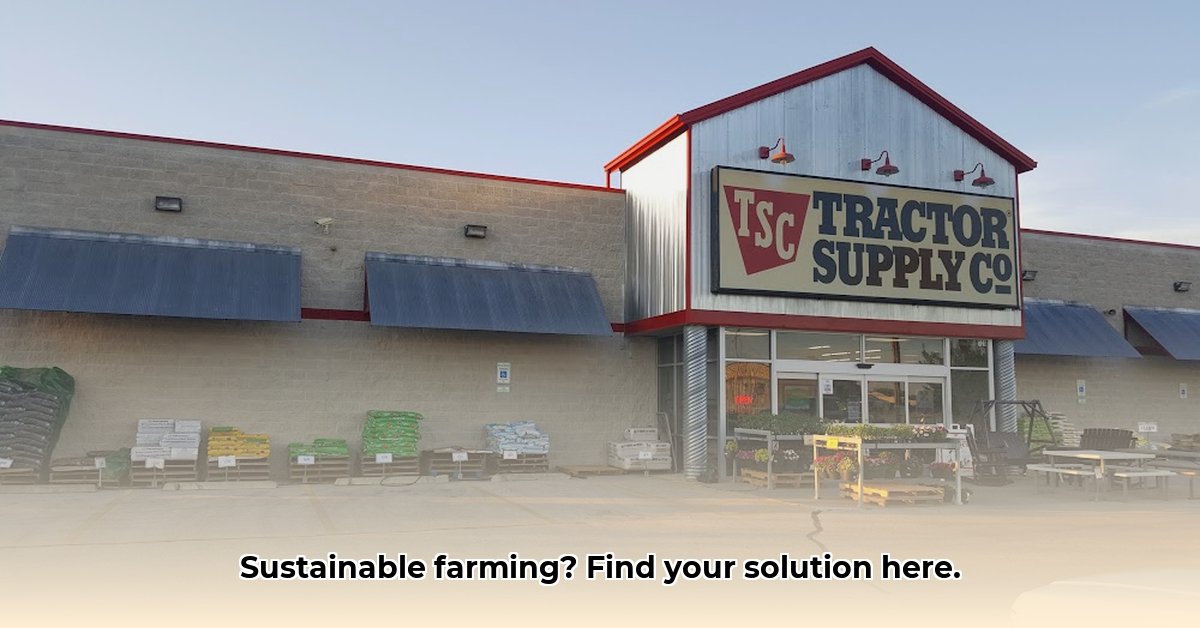
Finding the right supplies for sustainable farming shouldn't be a struggle. This article explores how Tractor Supply (TSC) in Brookfield, Missouri, can become a cornerstone for local eco-conscious agriculture, providing both products and knowledge to support a greener future for farmers and gardeners alike. We'll examine TSC's current offerings, explore opportunities for growth, and provide actionable steps for both the company and its customers to embrace more sustainable practices. For examples of similar initiatives, see this TSC in Calcutta.
Tractor Supply Brookfield: Current Offerings & Opportunities
Tractor Supply, a familiar name in rural communities, offers many products useful for sustainable agriculture. Their livestock feed contributes to healthy animals and efficient food production, while their gardening supplies empower homegrown food production. However, a critical question arises: Does TSC's current selection fully meet the growing demand for truly sustainable farming practices? While they offer a base level of support, substantial room for improvement exists.
Leveling Up Sustainability at TSC: Practical Steps
For TSC Brookfield to become a leader in promoting sustainable agriculture, several key changes are necessary. These changes, implemented strategically, can significantly impact both the store's success and the community's environmental wellbeing.
Actionable Steps for Tractor Supply:
Expand the Eco-Friendly Product Range: Go beyond basic supplies. Include organic seeds, sustainably harvested lumber, compostable plant pots, and water-efficient irrigation systems. A dedicated "eco-friendly aisle" would effectively highlight these choices to consumers.
Invest in Comprehensive Staff Training: Equip employees with knowledge on sustainable farming techniques. Well-trained staff can become valuable resources, answering customer questions about composting, water conservation, or organic fertilizers, further building customer loyalty. "This is crucial for creating a knowledgeable and helpful staff," says Dr. Emily Carter, Professor of Agricultural Sustainability at the University of Missouri.
Prioritize Local and Sustainable Sourcing: Partner with local businesses committed to organic and sustainable practices. This supports the local economy, reduces transportation emissions, and often provides higher-quality products. "Supporting local suppliers not only improves sustainability but also strengthens community ties," adds John Miller, owner of Miller's Organic Farm in Brookfield, MO.
Transform TSC into an Educational Hub: Host workshops or create online resources on sustainable farming practices. Collaboration with local agricultural extension services or universities could enhance the educational offerings. Consider webinars on composting, workshops on water-wise gardening, or even beginner's classes on humane animal husbandry. This proactive approach firmly positions TSC as a community leader.
Actionable Steps for Consumers:
Prioritize Sustainable Purchases: When buying seeds, fertilizers, or tools, look for certifications like USDA Organic or other reputable sustainability labels. Every conscious purchase contributes to a positive impact.
Embrace Continuous Learning: Numerous online resources and local agricultural extension services provide valuable information on sustainable farming practices. Experiment, ask questions, and actively seek knowledge.
Implement Practical Sustainable Practices: Simple steps like composting food scraps, using water-efficient irrigation techniques, and choosing reusable containers significantly reduce environmental impact.
Support Local Sustainable Farms: Purchasing locally sourced food directly supports farms committed to sustainable practices, creating a positive feedback loop for both the farmer and the consumer.
Addressing Challenges and Risks: A Proactive Approach
The transition to more sustainable farming isn't without its challenges. The risk of supply chain disruptions for organic products and increased competition requires proactive strategies.
To mitigate these risks, Tractor Supply Brookfield should:
Diversify Supply Chains: Build strong relationships with multiple suppliers, ensuring a reliable supply of sustainable goods, even amidst market fluctuations.
Enhance Sustainability Marketing: Clearly communicate TSC's commitment to sustainable agriculture through targeted marketing campaigns, both online and in-store, to attract environmentally conscious customers.
Foster Community Partnerships: Collaborate with local organizations and influencers to educate consumers about the benefits of sustainable practices, strengthening the community's understanding and support.
Brookfield's Sustainable Future: A Collaborative Vision
The future of sustainable agriculture in Brookfield is a shared endeavor. Consumers, businesses like Tractor Supply, and local governments all play vital roles. By actively embracing sustainable practices, Tractor Supply Brookfield can enhance its own success while contributing to a healthier and more resilient community, creating a positive legacy for future generations.